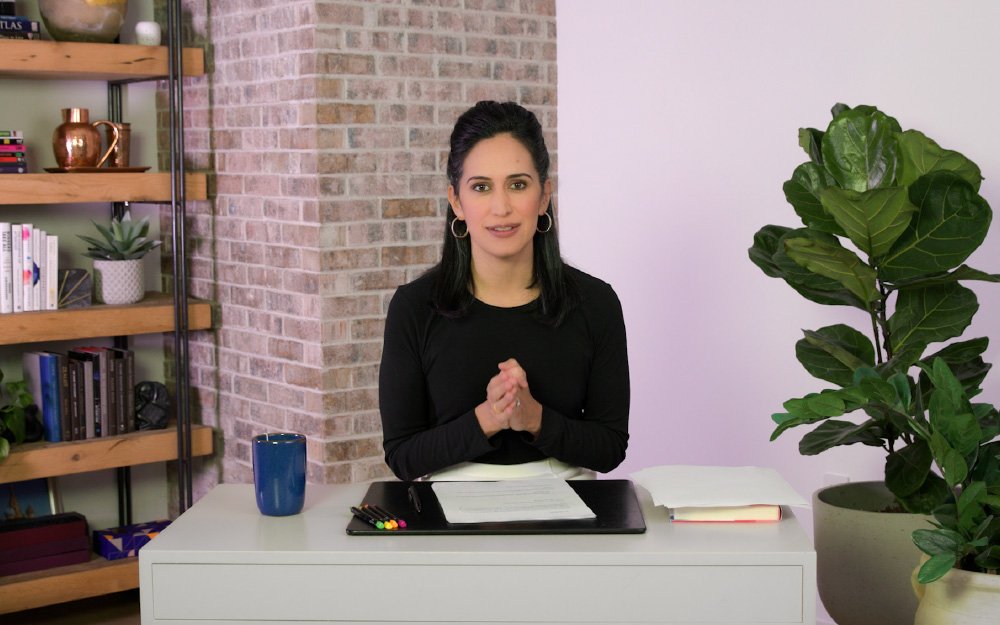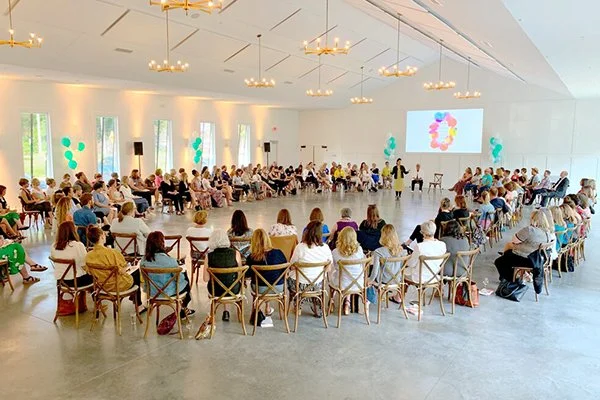
I received the wonderful invitation last November to speak at TEDxUHasselt in Belgium. I talk a bit about the fears that hold us back and some specific steps that I’ve found helpful to begin to, well, reboot yourself.
Last month I tried a new experiment: Public Visioning Labs. Until December, all of my group Visioning Labs were designed and conducted for private clients — companies, universities, startups, etc. I had been getting a number of requests from folks who were curious about the Labs and wanted to experience one without doing the more intensive one-on-one Labs. So, I decided to create and launch a group Public Visioning Lab in New York city.
The Public Visioning Lab is an opportunity for individuals to explore their own sense of vision and purpose and experiment with various tools to wordsmith together a personal purpose statement. The Labs are limited to 20 people and are an introduction to some of the tools I use at Thrive Labs.
The Labs are two 2 1/2 hour sessions on a weeknight. The January Lab is on Wednesday, January 16 & Wednesday, January 23, 2013, from 6:30-8pm. You can sign up here: http://www.eventbrite.com/event/5091942136#. (No drop ins). And once you do so, I will send you a Visioning Workbook to get you on your way!
I was recently approached by Kristen Joy Watts to participate in something called The Weight of Objects. She asked me to think about an object that was important to me and explained that she and photographer Ramsay de Give had banded together to collaborate on a portrait project. The twist: the portraits are of both the person and their object. Watts is a senior content strategist at R/GA and de Give is a freelance photographer for the New York Times and Wall Street Journal. Basically, they both have day jobs and yet have decided to, on their own time, create this cool, quirky lens on the world.
Their project reminds me of two ideas that often come up in Visioning Labs that I have clients work on:
First, the idea of a Passion Project. A Passion Project is a way into doing something that you love without making it your whole life all at once. The idea is to identify one or two things that you love (or you think you will love) and devote a certain amount of time to that thing. For example, for graduate students who have three months of summer internship time, to work for two months and spend one of those months dancing or composing music or cooking intensively (taking on a Passionship rather than an internship, if you will). For those working in full-time jobs, taking a week of vacation and rather than traveling somewhere testing out an idea intensively. (Would I really like to write for 5 hours a day, or do I just like the idea of it?)
Second, the idea of slow-drip coffee. Slow-drip coffee is a term my husband first used to describe what happens when you read the newspaper regularly. Spending 30 minutes a day reading the newspaper adds up to a lifetime of knowing what happened in the world and being able to tie events (small and large) together over time. However, if we only ever read the newspaper when it out-competed everything else one could do with those 30-minutes, we might never actually sit down and read it. Similarly, working on something you enjoy for small bits at a time and sticking to it adds up to a project. To me, The Weight of Objects is a perfect “slow-drip coffee” project. They both have a lot of other things going on, but on one burner is this incredible project that clearly brings them both joy and, over time, mastery. And, when they’re done, they have collected incredible stories, pictures and experiences for others to share.
What might it mean to disrupt restaurants? What would democratizing the personal chef market look like? What happens when four founders come together to figure it out? Apparently, Kitchensurfing does.
Last week, Thrive Labs hosted an “I Am Here” salon (more on that later) and, rather than booking a caterer or hosting it in a restaurant, we experimented by trying out Kitchensurfing. For less than the cost of hosting a salon at a restaurant and triple the intimacy of it, a personal chef worked with me to create, cook and clean up (!) a beautiful dinner for 14 people. You name your price (there’s no minimum) and you then get paired up with possible chefs. They’re still in beta and are moving towards launching in the coming months.
I recently caught up with one of Kitchensurfing’s co-founders, Chris Muscarella, also co-owner of Brooklyn’s Rucola, to find out more about his team’s vision. I wanted to learn more about how one actually goes about creating a marketplace.
Q. How did you come up with the idea for Kitchensurfing?
A. Kitchensurfing is an idea that evolved over time based on a series of observations. Initially, my German colleagues wanted to build a social system for people to find dinner parties but we didn’t think that would be a good business. I’d spent a lot of time thinking about social marketplaces –and I own a restaurant and witnessed a lot of chef culture. Somehow the tension in that gestational period ended up resulting in our current approach.
Q. What’s the vision?
A. Ultimately, we want to create a community that gives chefs a way to cook the food they love and have an audience – and for people that love food to have their best food experiences outside of restaurants. That might mean a Sunday brunch in a friend’s apartment that can last four hours (and no one has to do the dishes). It might mean finding a local chef to teach you about Turkish culture and food when you’re in Istanbul on a holiday. Or it might mean visiting your family in the Midwest and realizing the best meal you can find is a Kitchensurfing chef who’s a talented amateur. It’s kind of like “No Reservations” for everyone, but hopefully with a homier vibe.
Q. If Kitchensurfing is wildly successful, what are the implications for restaurants? Chefs? Eaters?
A. For chefs: one of the things that’s been amazing to watch in our private beta is the degree to which people love engaging with chefs. The tough thing about loving to cook is that restaurants are unforgiving environments and most people that come out of culinary school just aren’t cut out for a career in a restaurant kitchen. (Something like only 20% of graduates are still in restaurant kitchens five years after graduation). We hope to give those people an outlet for their craft, as well as talented amateurs and professional chefs that want to experiment outside of regular restaurant service. So, what we’re really doing is opening up a pool of very talented people to consumers that they never had access to before.
For restaurants: who knows about the implications. Good restaurants will always have a place, but maybe we end up putting pressure on bad restaurants. Restaurants are a pretty new concept in human history. They’ve only been around since just post-French Revolution and while they fulfill certain needs very well, certainly aren’t the end-all-be-all of dining experiences. They’re very good at some things and awful at others. For example, I don’t think I’ve ever had a great experience with more than 10 people at a restaurant.
For eaters: we’re going to change the way they think about what dining options are available to them. Why go to a mediocre Indian restaurant where everything is oily when you can have a talented Indian chef come to your own home and make you real Indian food?
Q. What are the core values that drive your work?
A. We really do believe that what we’re doing is in service of bringing people together and we never want to do anything that gets in the way of that. Food is culture and food is social. We’re just trying to encourage that and facilitate it.
Q. How do you select your chefs?
A. We actually have an open sign up process for chefs and we encourage everyone, even if they only make one dish that their grandmother taught them, to sign up as a chef. Currently, we’re personally screening chefs for their food and for their personability, but eventually it will be open sign up and left to peer review.
Q. Is Kitchensurfing disrupting a market? Is it supposed to?
A. Everyone eats. It’s a very large market. Do we disrupt the catering world? Maybe. Do we disrupt restaurants? Maybe. Are we creating a new market? Definitely. Are we focused on disrupting any kind of incumbent or existing structure? No – we’re on our own path.
Q. Do you think Kitchensurfing has the potential to scale as dramatically as Airbnb did? What are the similarities? Differences?
A. Any time you help people fulfill fundamental human needs, and you take the right approach, there’s a lot of potential. We’re obviously optimistic about our future, but would be very happy to be doing what we’re doing even if we didn’t end up at the scale of Airbnb.
I do hope that we can offer a more social and human experience than Airbnb. For example, no one would ever “follow” a house on Airbnb. It’s a pretty static thing, whereas chefs are people. They’re always changing their menus, their curiosities. I think there’s a lot of interesting work to be done there that’s never happened in an online marketplace.
Q. Anything else you’d like our readers to know?
A. I’d like to invite them all to try the service. There are very few things that I can promise people. But I can promise that if you used Kitchensurfing once a month with a group of 8 – 10 friends to share a wonderful meal or a private cooking class, that you’d probably find yourself feeling a bit happier.
A few weeks ago, I received an interesting Tweet responding to a piece I wrote about heightened risk-aversion among those with many options: “It’s the result of what’s taught to us in the first twenty years of our lives. Risk-taking is squeezed out of us,” Alex Welsh Tweeted. He continued: “It was especially strong in the transition between high school to college when I was choosing a major.” I asked Alex if he would be willing to write a reflection on his own historical timeline of risk-aversion and fear of failure for this blog. And, he agreed. Below is Alex’s rendition of how and when his dreams became safe, and what he did about it.
“In retrospect, I can see a stark reversal taking place over the course of my educational career. When I was in elementary school, I remember my classmates’ desires to become something they considered remarkable: astronauts, firefighters, and the like. I wanted to work at Lego designing new Lego sets because I thought the ones that existed then were too simple. I knew that I could do anything that I wanted, if I put my mind to it. Unfortunately, that stage of inspirational bliss did not last forever.
When high school came, we no longer had such high hopes for fantastic careers. I noticed a very subtle shift in what my teachers and parents were telling me. Of course I could do whatever I wanted, as long as it was safe and in high demand. With that in mind, I thought about being an architect because I liked designing new buildings. When I started looking at colleges, I thought about chemical engineering because I excelled in science. Finally, I settled on business because I wanted to work with people.
So much for working at Lego.
Somewhere along the line, my desire for risk-taking and adventure was nearly ground out of me, and I took the safe route into business school. I knew that in business school I was a shoe-in. I got the top scholarship and aced my classes. I went on networking trips and was in the Select Leader Development Program. Even after all that, though, I was bored out of my mind.
I told myself that it would get better when I started taking classes in my major. It wasn’t. Finally, half way through my second year, I came to the end of myself. I was going insane and I hated every class I was taking. Something had to change.
As I reflected on where I was, I had an epiphany. The control I have had over my education was not a good thing. It meant that I was never satisfied or surprised with the outcome. If I wanted to be in a work environment where I thrived, I would need to be constantly challenged. I needed something for which I could give my all. I needed to stop playing it safe.
Now that I am finished with my formal education, I have realized several things:
- In school, I had been conditioned to expect predictable results based on the amount of effort I put forth. I was stagnant because I wasn’t taking risks.
- I learned I could control the outcome of my performance, so that became my goal. I would put forth only the effort necessary to get an A or A-, which was satisfactory to me. Essentially, I held my required schooling at bay with as little energy as possible while searching with all my remaining energy to find something that would actually engage me.
Slowly, I began to take my education into my own hands. I began to seek out knowledge that I wasn’t getting in the classroom. Instead of reading textbooks full of facts I could find online, I read books like Linchpin by Seth Godin and A Whole New Mind by Daniel Pink. I began exposing myself to people that made a lifestyle out of taking risks based on their passion. And, beginning with my third year, I left the business school and started to study video game design, where I could put everything I had into creating something meaningful. Now I am starting a career as a game producer in an incredibly competitive field where I take risks daily, and I feel energized, alive!
When I think about the way I was taught, I completely understand the rationale that drove my teachers and parents. They wanted to see me succeed, which in their minds meant having financial security in a “respectable” field. Working at Lego wouldn’t work because it wasn’t very likely that I would succeed, which would mean that they had failed, too. Their fear became my fear, and it held me back.
Now that I have broken that fear, I see a few things more clearly:
- Without risk, my life was predictable, boring, and unsatisfying
- Taking risks is important, but they have to be the right risks
- The right risks are driven by passion and tempered by wisdom
I have discovered that risk-taking is a lifestyle that leads to a very interesting, full life. Fear of failure is debilitating, but it’s rarely based on reality. Even the times when I don’t get to where I planned to go, I always find myself closer to something else new and exciting.
What is keeping you from taking the right risks?”
Alex Welsh is a video game producer and storyteller. He is a recent graduate from Ohio University, where he studied game design and business. Now he is jump-starting his career as a producer and writing for his blog. Find him at AlexWelsh.me or @alexswelsh.